How to Stop a Conservatory Overheating in Havant and Hayling Island
25 August 2026 · 6 min read
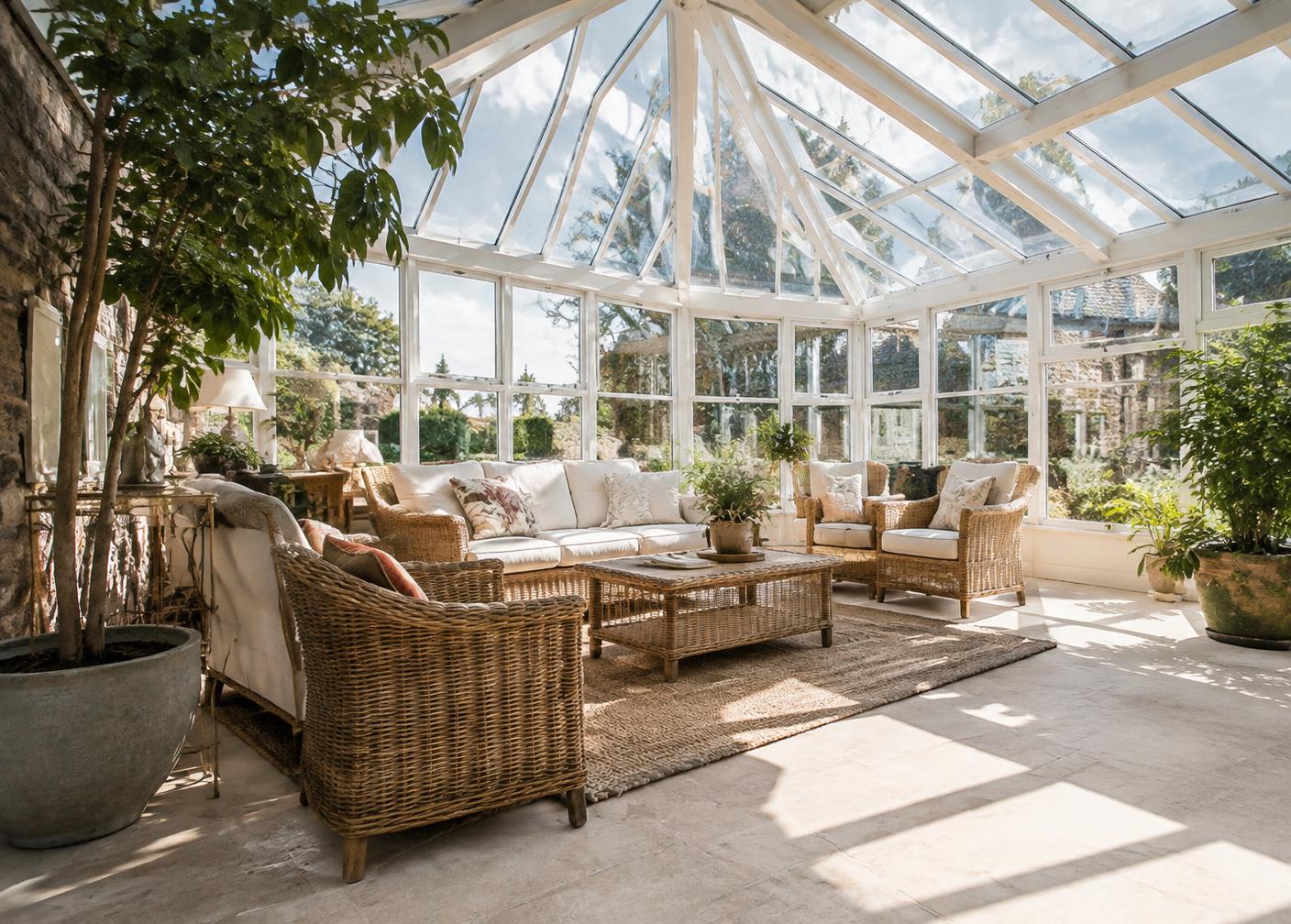
A conservatory should be the best room in the house. Too often, from late spring to early autumn, it becomes the room nobody can sit in after eleven in the morning. Here is an honest look at why that happens and what homeowners in Havant and Hayling Island can realistically do about it.
Why conservatories get so hot
The simple answer is glass. Sunlight passes through glazing and hits floors, furniture and walls, which absorb it and release it as heat. Because a conservatory is mostly glass, often including the roof, it collects far more solar energy than an ordinary room of the same size, and it has very little solid wall or ceiling to slow the process down.
On the South Coast this is made worse by our light levels. Homes on Hayling Island and around Langstone Harbour see bright, reflected light off the water and wide open skies, and many Havant gardens face south or west to catch the afternoon sun. That orientation is exactly what makes a conservatory feel lovely in March and unbearable in July.
There is also the question of how the room was built. Older conservatories with polycarbonate roofs or basic glazing tend to suffer the most. Newer glazed extensions with bifold doors and roof lanterns are better insulated, but the sheer area of glass still means strong solar gain on sunny days. We cover the specific challenges of large opening doors in our guide to Window Film for Bifold Doors.
Start with the basics: ventilation and shading
Before spending any money, make sure the room can breathe. Opening roof vents and windows early in the day, before the room heats up, does more than throwing them open at three in the afternoon. Moving air through the space helps carry heat away, and a simple fan can make a noticeable difference to how the room feels.
External shading is very effective because it stops sunlight before it reaches the glass. Awnings, a pergola with planting or even a well-placed tree can all help, although they change the look of the house and garden and are not always practical on a roof. Internal blinds help with glare and privacy, but because the sun has already passed through the glass, some of that heat is already inside the room.
None of these measures is wrong, and the best results usually come from combining a few of them. The point is to understand what each one does so you are not disappointed.
Where window film fits in
Solar control window film is a thin layer applied to the inside surface of existing glass. It reflects and absorbs part of the incoming solar energy before it can turn into heat inside the room. Because it sits on the glass you already have, there is no building work, no planning consideration in most cases and very little disruption on installation day.
Our page on Conservatory Window Film explains the options in more detail, from almost clear films that keep the view looking natural to more reflective films that do more to control heat and brightness. The right choice depends on the direction the glass faces, how much of the roof is glazed, and how much you mind a change in appearance from the garden.
We are careful about what we promise. Film helps manage direct solar gain; it does not cool the air like an air conditioner, it does not replace ventilation, and it is not a winter insulation product unless a specific film has been designed and tested for that. Any performance figures we give you come from the manufacturer's specification for the exact film we recommend, not from a general claim. The wider science is set out in Window Film for Heat Reduction.
Glare, fading and the rest of the house
Heat is rarely the only problem. Strong sunlight can make it hard to watch television or use a laptop, and over time it contributes to fading of floors, rugs and upholstered furniture. Most solar control films also reduce ultraviolet light, which is one of the main causes of fading. No film stops fading completely, because visible light and heat play a part too, but reducing UV can slow it down. Read more on UV Protection Window Film.
It is also worth thinking beyond the conservatory itself. If your kitchen extension, a south-facing bedroom or a home office has the same problem, treating several rooms at once is often more efficient than coming back later. Many Havant homeowners now work from home in a converted spare room, and glare on screens is a common complaint we cover in Window Film for Home Offices.
Checking your glass first
Not every film is suitable for every type of glass. Sealed double-glazed units, laminated glass, toughened glass and some low-emissivity coatings all affect which films are appropriate, because film changes how much heat the glass itself absorbs. That is why we always check glazing compatibility during a survey before recommending a product. It is also sensible to check whether your window installer's warranty has any conditions around applied films; we can help you work out what applies.
If you have specific questions about sealed units, our article Is window film safe on double glazing? goes into more detail.
Local to Havant and Hayling Island
We are based in Havant, which means surveys in PO9 and PO11 are quick to arrange and we can see your conservatory at the time of day the sun causes the problem. Our Window Film in Havant and Window Film in Hayling Island pages describe the types of homes and glazing we see most often locally, from 1930s semis in Bedhampton to modern seafront properties on the island.
We also work across the wider area. If you live a little further west, our guide to Privacy Window Film for Portsmouth Homes: What Actually Works covers a different but equally common problem, and businesses may find Office Window Film in Chichester: Calmer, More Comfortable Workspaces useful.
What it costs and what happens next
Price depends mainly on the area of glass, access (especially for roof panels) and the film chosen. Our page How much does window film cost? explains our current guide rates and what affects the final quotation.
The easiest first step is to send us a few photographs of your conservatory and tell us when it gets too hot. We will give you an honest view on whether film is the right answer before anyone visits. You can find an overview of everything we do on our home page, Professional Window Film Installation for Homes & Businesses, or go straight to our free quote form.
A conservatory that overheats is one of the most common problems we are asked about, and one of the most satisfying to solve. With the right combination of ventilation, shading and properly specified Solar Control Window Film for Your Home, it can become a room you actually use all summer long.